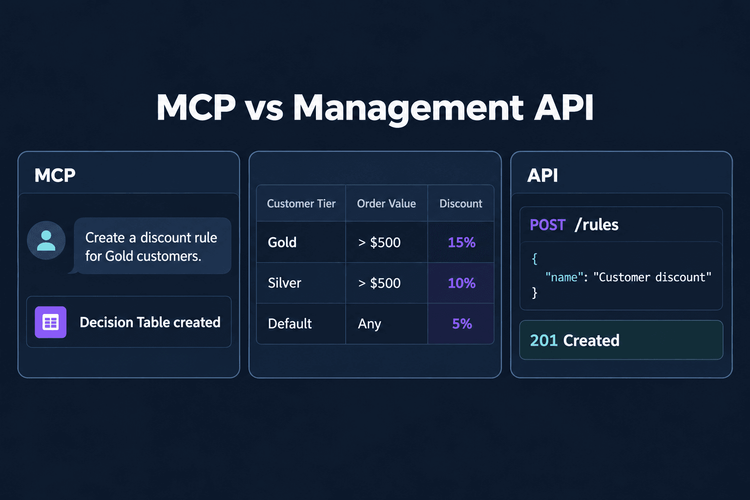
The first question most people ask about the MCP server is whether it replaces the Management API.
It does not. They are built for different tasks, and picking the wrong one creates problems that are hard to trace later.
The Short Version
The Management API is for systems. MCP is for conversations, whether the other side of that conversation is a person or an agent.
If a machine needs to run the same task at 3 a.m. every night and fail visibly when something goes wrong, use the API. If someone needs to explore, build, and adjust logic while thinking through options, use MCP.
Determinism is the key difference. A deployment pipeline that sometimes interprets instructions differently is not reliable.
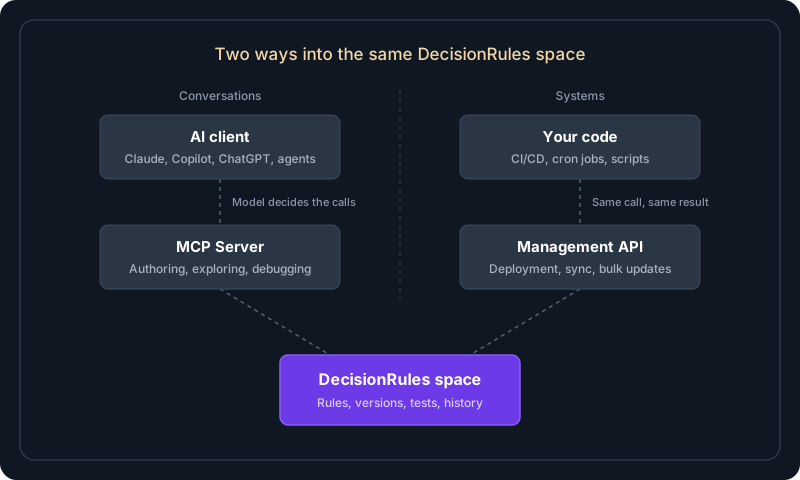
Use the MCP Server for interactive authoring, exploration, and debugging; use the Management API for deterministic deployment, synchronization, and bulk operations.
| Management API | MCP Server | |
|---|---|---|
| Consumer | Your code | An AI client, driven by a person or an agent |
| Authorization | Management API key | Sign-in from the client, or a key for self-hosted setups |
| Determinism | Same call, same result, every time | The model decides which actions to call and in what order |
| Interface | Documented endpoints you integrate against | Natural language over a set of exposed actions |
| Best for | CI/CD, scheduled syncs, deployment pipelines | Authoring, exploring, debugging, agent workflows |
| Failure mode | An HTTP error you can assert on | A model that misunderstood what you asked for |
| Audit | Your integration logs plus rule history | Rule history, same as any other change |
Where MCP Wins
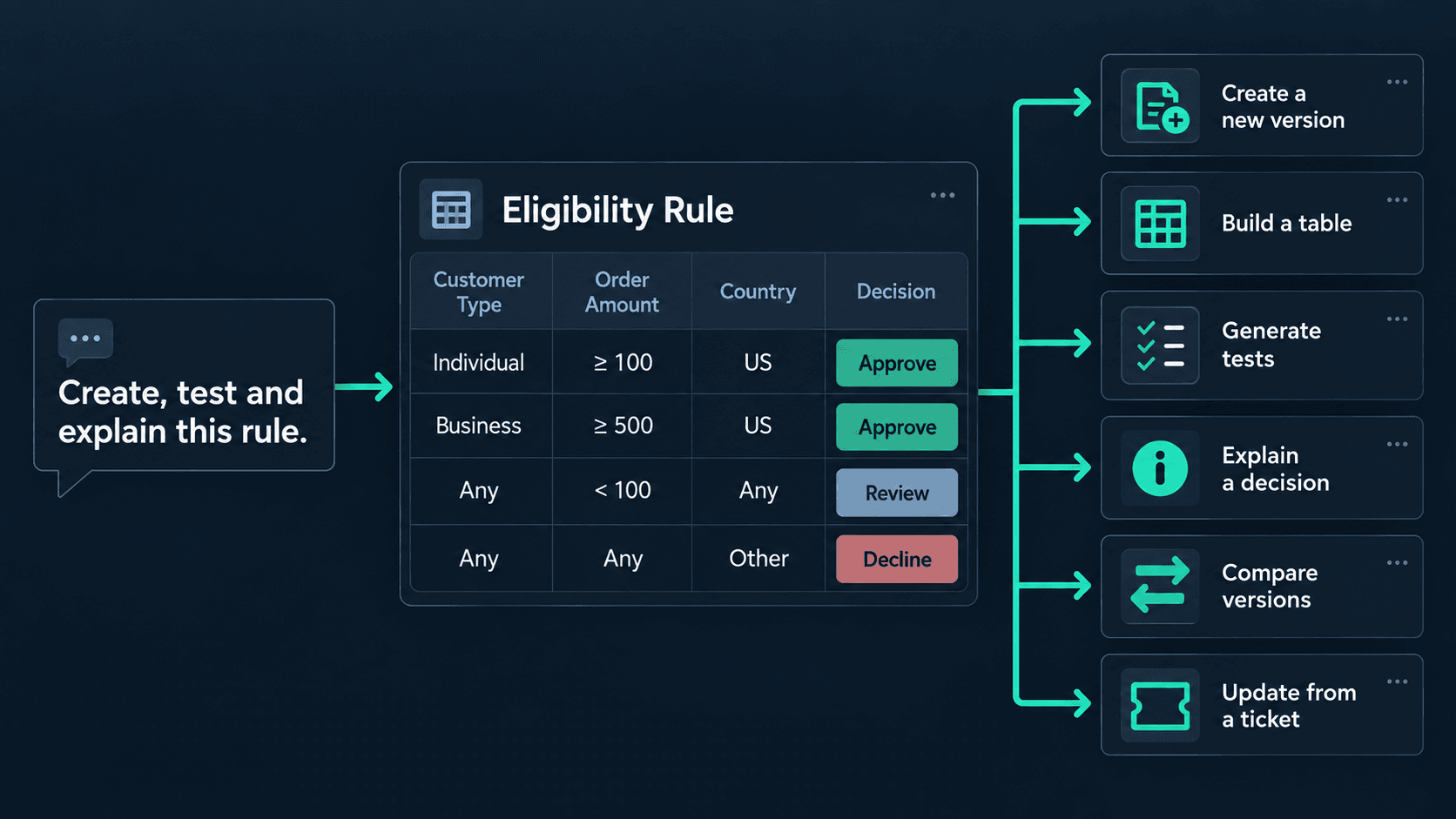
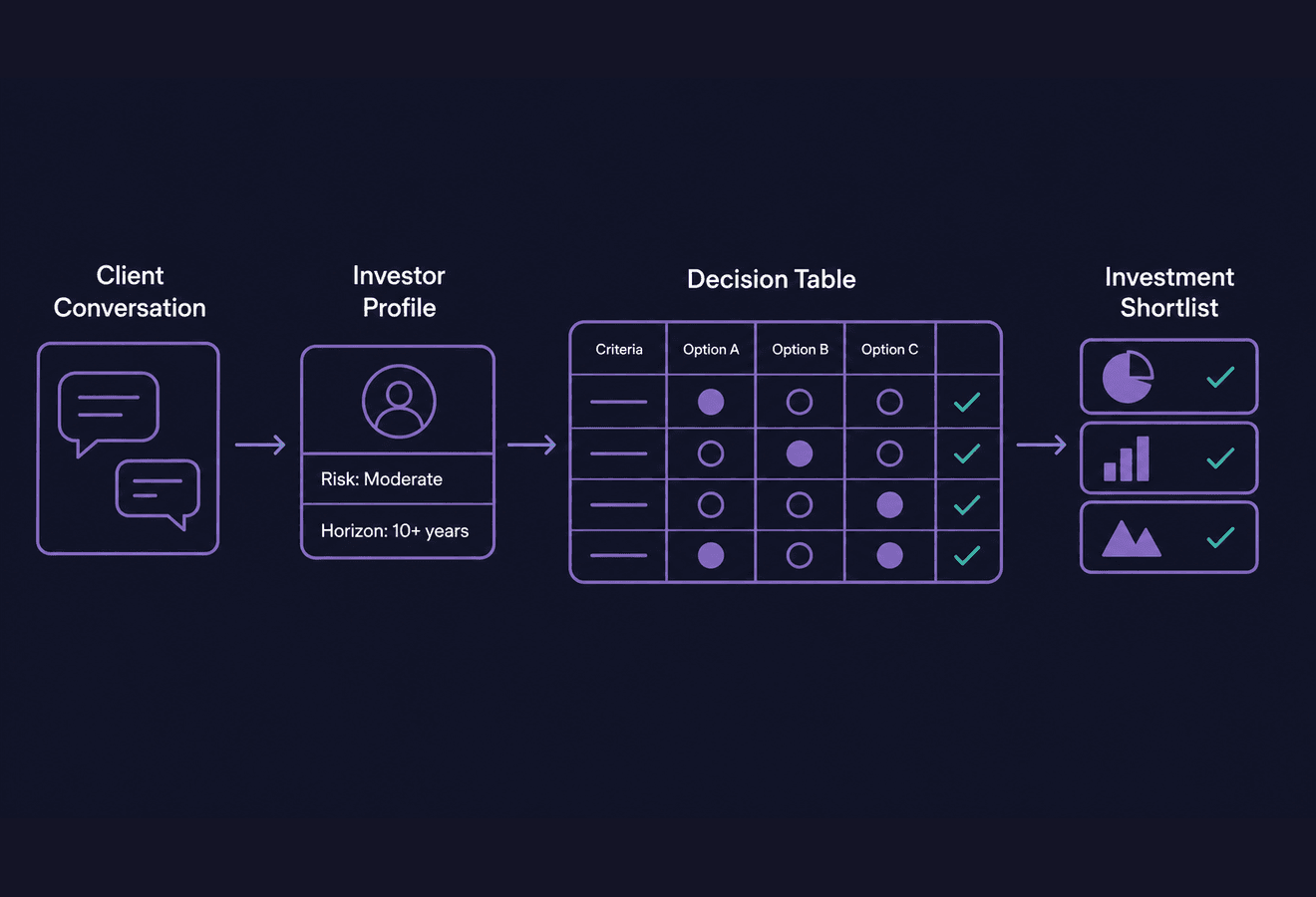
Authoring. You can describe a pricing table in plain language and get a working version back. It is faster than building by hand. It is far faster than scripting through API calls. See rule creation for examples of how this works.
Exploration. You need to know which rules changed last month, or what depends on a specific rule. With the API, that takes multiple requests and some custom code. With MCP, you simply ask.
Debugging. You run a rule with specific input and want to understand why it returned a certain result. That is a conversation, not an integration. Test data generation and rule summaries follow the same pattern.
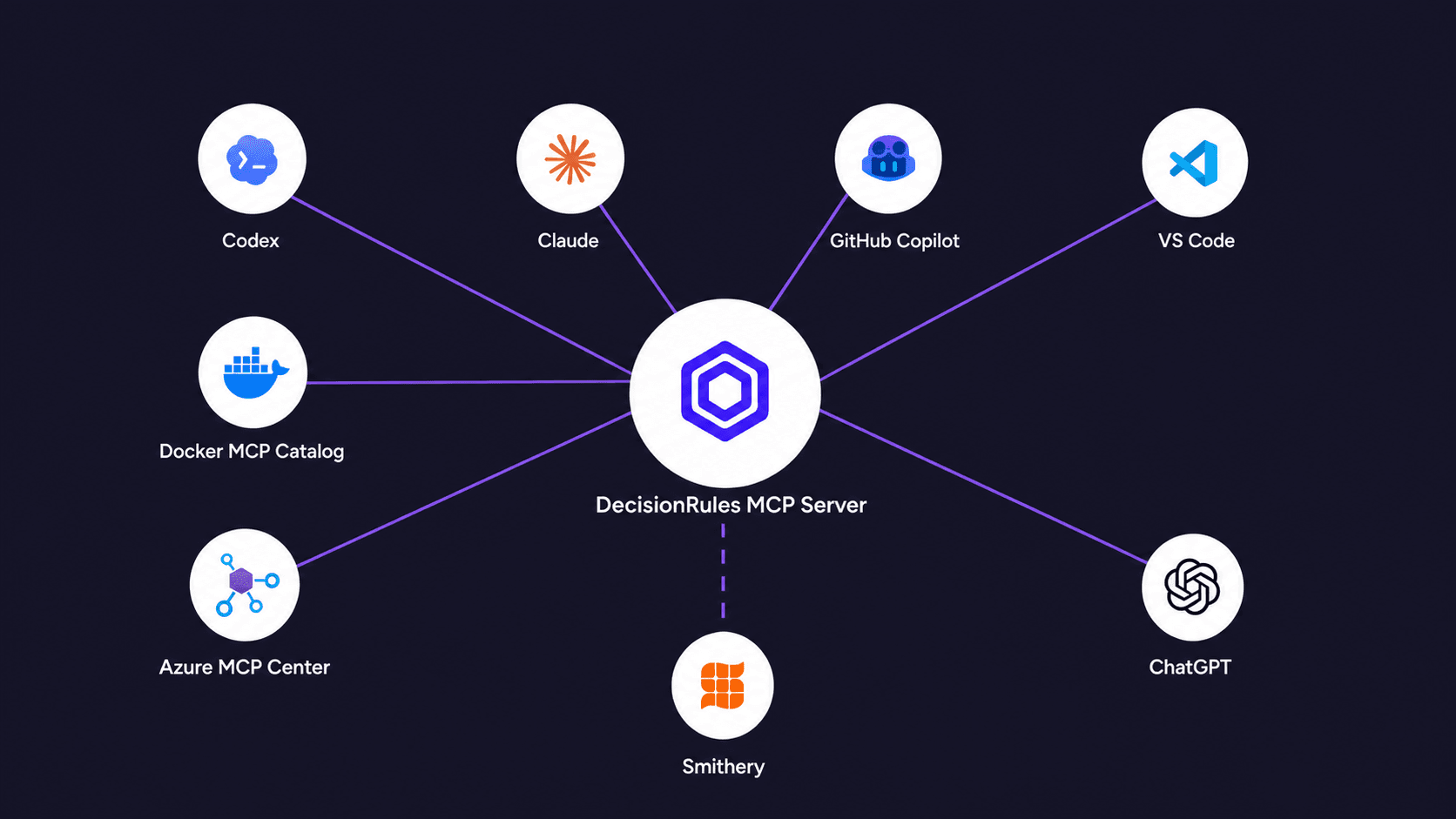
Working alongside your other tools. An assistant holding several MCP connections can read a requirement from Jira, build the rule, and announce the result in Slack, in one request.
Where the API Wins
Anything scheduled. Nightly data refreshes. Syncs from an external source of truth. Anything driven by a cron job.
Deployment. Moving rules between spaces. Importing and exporting during a release. Keeping environments aligned.
Anything that must be reproducible. If the same input must generate the same sequence of calls for compliance, use code. Models introduce variability. Avoid them here.
High-volume operations. Updating hundreds of rules in bulk? That belongs in a script.
Use Both
The two tools are not in conflict. Most teams use both. Rules are drafted and tested in MCP, where the thinking happens. They are promoted and synchronised through the API, where consistency matters.
A reasonable division: MCP writes the draft, the API ships it.
Getting Started With Either
The MCP Server page explains what the server provides and how to connect. The Management API page contains all additional information.
You are on a private instance? The self-hosted setup applies to MCP, it does not apply to the API. The API behaves the same regardless of environment.

Ivan Peresta works at DecisionRules, where his role spans product analysis, professional services, and customer support. He is involved across the full lifecycle of product features, from early design and UX thinking to hands-on testing, documentation, and customer-facing delivery. His work bridges the gap between product development and the people who actually use it, whether that means helping a customer design their rule system or making sure a new feature ships with clear guidance and working examples.